

VSAT technology
Connectivity beyond terrestrial networks.
Understand satellite connectivity and the network topologies used to link offices, remote sites and distributed teams.
The fundamentals
What is VSAT?
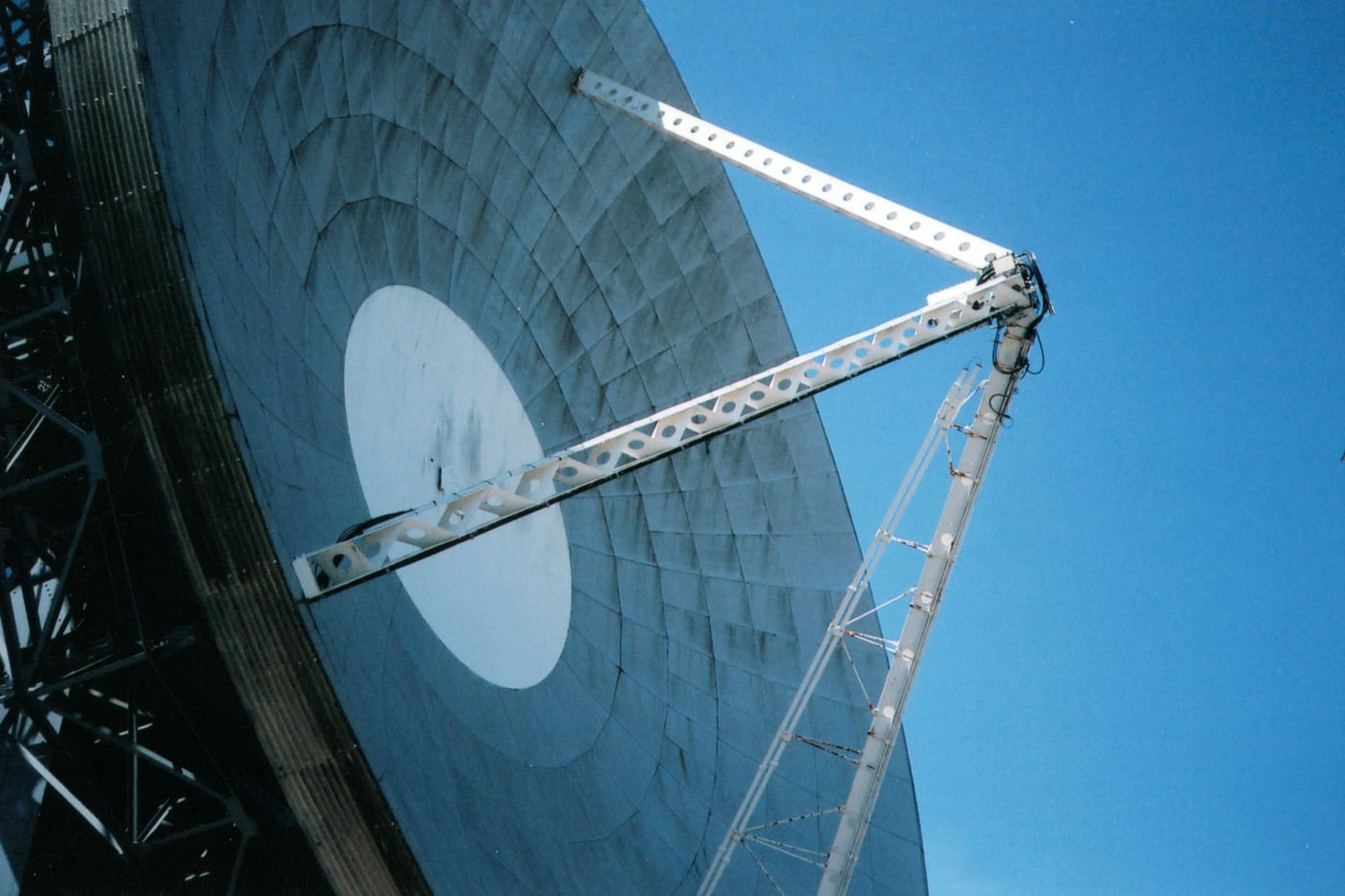
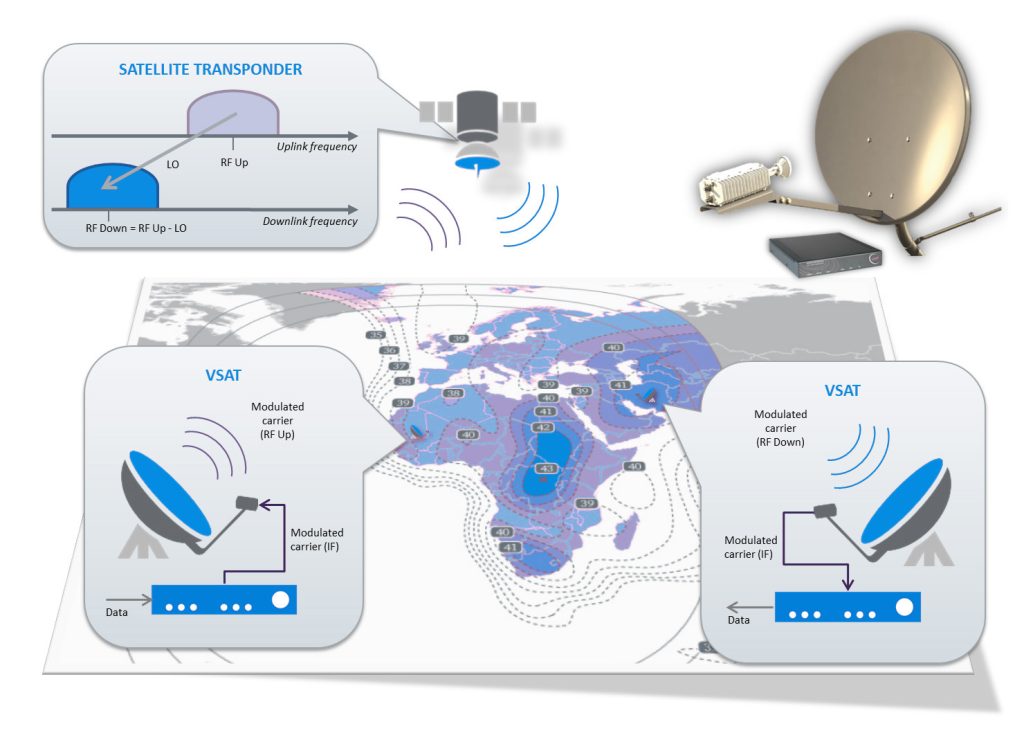
VSAT stands for Very Small Aperture Terminal. It uses a compact terminal to provide two-way satellite communication for internet, intranet, data, voice and video applications.
Satellite connectivity can support locations where terrestrial connectivity is limited, and can be integrated with existing wired and wireless networks. Choosing the right topology starts with the number of sites, traffic patterns and applications.
Network topology 01
Point-to-point links (SCPC)
Dedicated connectivity between two sites.
SCPC uses a dedicated carrier to connect one station with another. It suits links that need allocated capacity for data, voice or video. Bandwidth and equipment are planned around the link budget and the customer’s requirements.

Network topology 02
Star networks (TDMA)
Remote sites connected through a central hub.
TDMA lets remote stations share capacity in time division. A star network provides a flexible approach to connecting many sites through a hub. Traffic between remote sites passes through the hub, which affects the communication path and delay.

Network topology 03
Mesh networks
Direct communication between remote sites.
Mesh networks let remote terminals communicate without routing every exchange through a central hub. This can reduce the number of satellite hops for communication between sites, making topology choice relevant to voice and video applications.

Network topology 04
Hybrid star and mesh networks
Combine hub access with direct site-to-site communication.
A hybrid topology can allow remote sites to access internet or intranet services through a hub while communicating directly with selected remote sites. The design depends on the network platform, addressing and operational requirements.

Choose a topology around your applications.
Traffic patterns
Consider whether sites communicate mainly with a central office or with each other.
Capacity needs
Assess dedicated and shared capacity options around usage and available coverage.
Integration
Plan addressing, equipment and connections to existing IT infrastructure.
Plan the right solution for your organisation.
Tell our team about your locations, applications and operational requirements.